
 Image 1 of 2
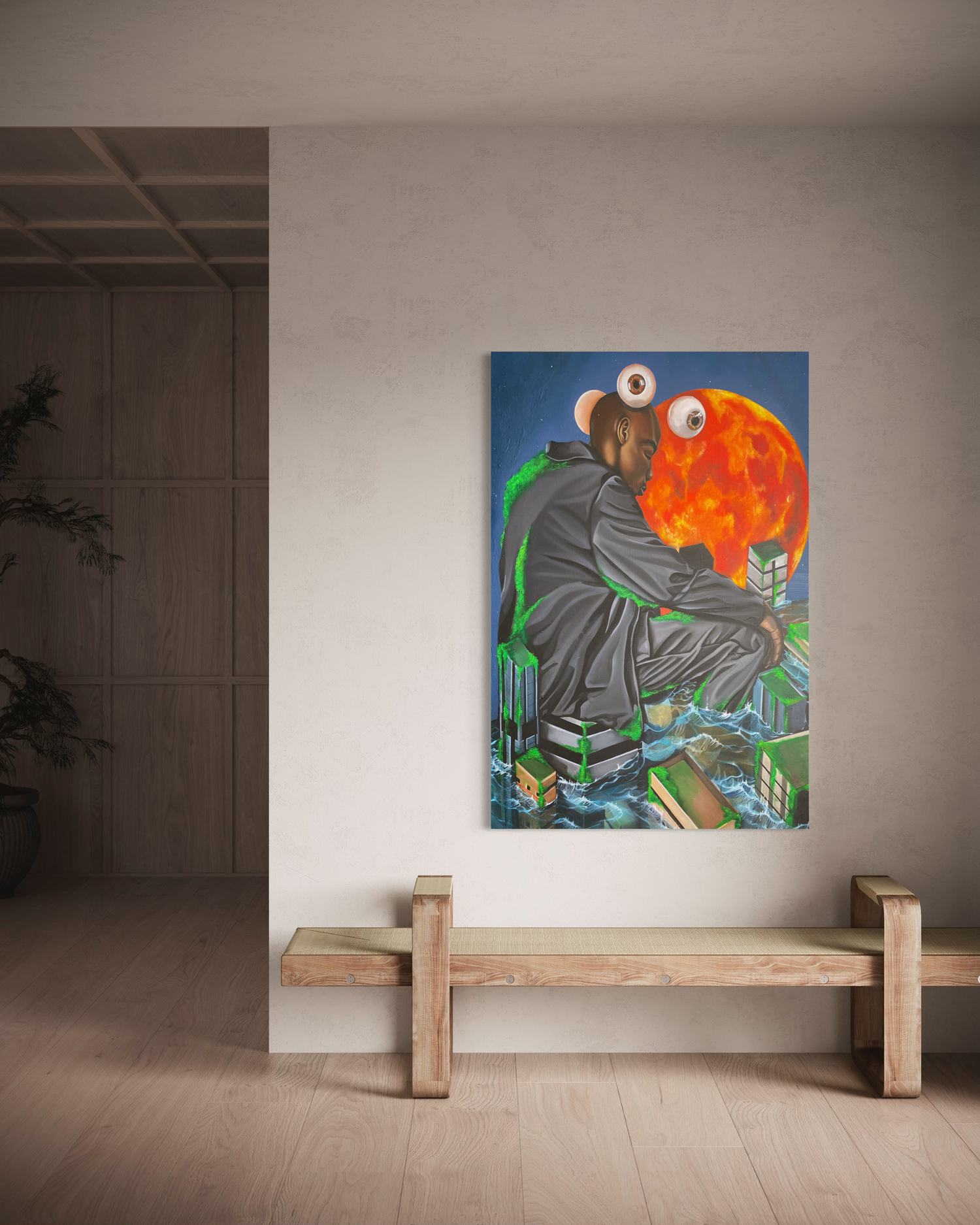 Image 2 of 2
Be Still explores the search for inner calm as the world around us changes, collapses, or moves beyond our control.
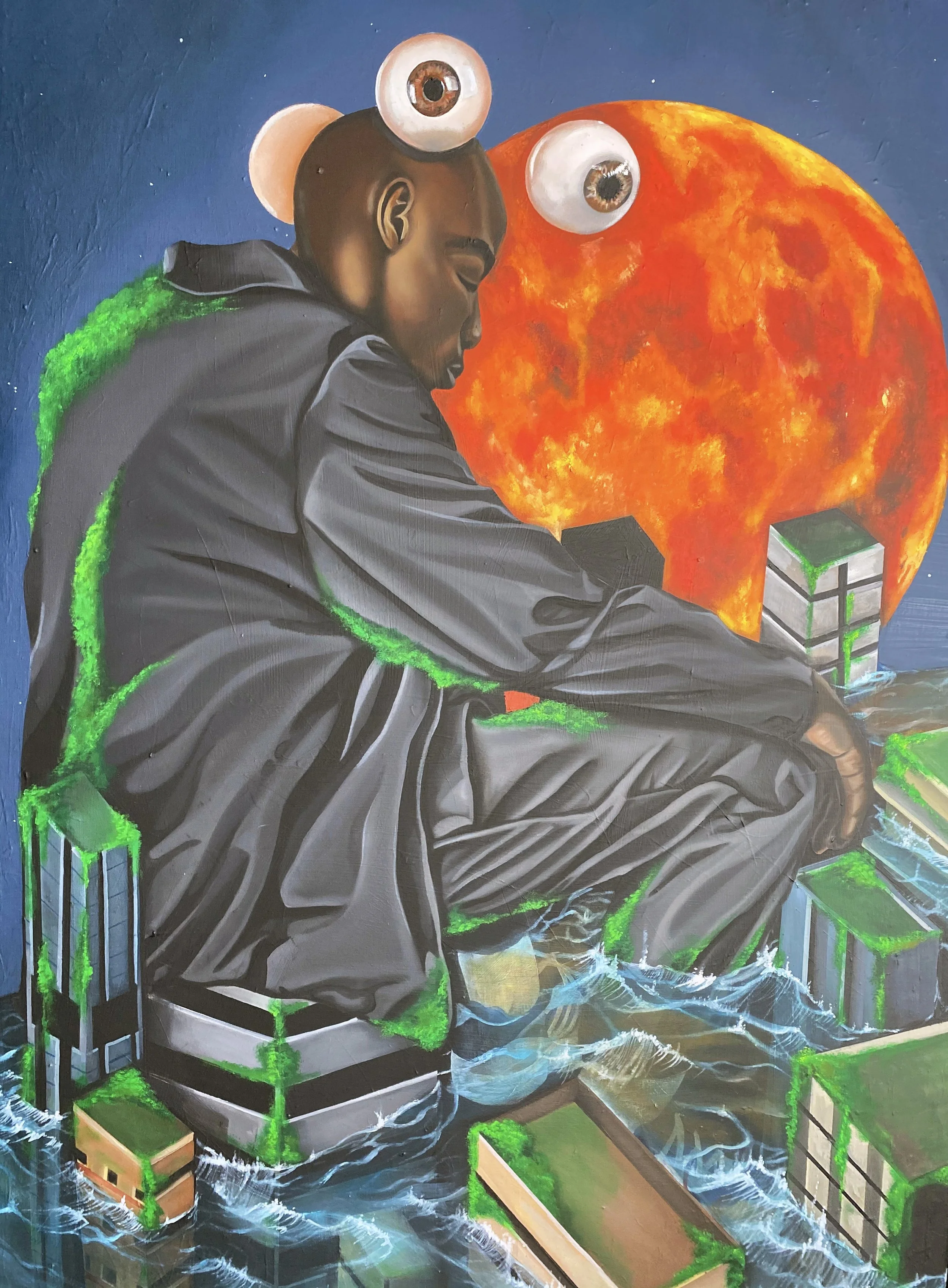
A monumental Black figure sits quietly above a flooded cityscape, his body towering over buildings partially consumed by rising water and new growth. Vines climb the architecture below while waves move between the structures, suggesting a world being reclaimed and transformed. Behind him, an enormous glowing celestial body dominates the horizon as floating eyes watch from above.
Yet the figure does not run.
He sits.
The title Be Still becomes both an instruction and a state of mind. In moments of uncertainty, there is an instinct to react, to fight against every change, or to search desperately for control. This work considers another possibility: the strength required to remain present when everything around you is in motion.
The figure's scale shifts the relationship between the individual and the environment. Buildings that normally tower over us become small beneath him. The flooded city, once a symbol of permanence and structure, now appears temporary. Nature begins growing across its surfaces, reminding us that the systems and environments we construct are never as permanent as they seem.
The floating eyes introduce another level of consciousness. They suggest observation, awareness, and the sensation of seeing beyond the immediate crisis. Rather than simply witnessing destruction, the figure appears to be contemplating transformation.
Throughout the painting, opposites coexist.
Chaos and stillness.
Destruction and growth.
Water and fire.
Civilization and nature.
The temporary and the eternal.
The brilliant orange celestial form behind the figure creates an atmosphere that feels both apocalyptic and regenerative. It is difficult to know whether we are witnessing an ending or the beginning of an entirely new world.
Perhaps it is both.
Be Still asks what remains when the structures around us begin to disappear. When the external world can no longer provide certainty, the self must find another place to stand.
Stillness is not the absence of chaos. It is the ability to remain grounded while chaos moves around you.
Be Still is a contemporary figurative artwork that explores stillness, consciousness, transformation, Black identity, resilience, environmental change, spirituality, and the search for inner stability in an uncertain world.
Be Still explores the search for inner calm as the world around us changes, collapses, or moves beyond our control.
A monumental Black figure sits quietly above a flooded cityscape, his body towering over buildings partially consumed by rising water and new growth. Vines climb the architecture below while waves move between the structures, suggesting a world being reclaimed and transformed. Behind him, an enormous glowing celestial body dominates the horizon as floating eyes watch from above.
Yet the figure does not run.
He sits.
The title Be Still becomes both an instruction and a state of mind. In moments of uncertainty, there is an instinct to react, to fight against every change, or to search desperately for control. This work considers another possibility: the strength required to remain present when everything around you is in motion.
The figure's scale shifts the relationship between the individual and the environment. Buildings that normally tower over us become small beneath him. The flooded city, once a symbol of permanence and structure, now appears temporary. Nature begins growing across its surfaces, reminding us that the systems and environments we construct are never as permanent as they seem.
The floating eyes introduce another level of consciousness. They suggest observation, awareness, and the sensation of seeing beyond the immediate crisis. Rather than simply witnessing destruction, the figure appears to be contemplating transformation.
Throughout the painting, opposites coexist.
Chaos and stillness.
Destruction and growth.
Water and fire.
Civilization and nature.
The temporary and the eternal.
The brilliant orange celestial form behind the figure creates an atmosphere that feels both apocalyptic and regenerative. It is difficult to know whether we are witnessing an ending or the beginning of an entirely new world.
Perhaps it is both.
Be Still asks what remains when the structures around us begin to disappear. When the external world can no longer provide certainty, the self must find another place to stand.
Stillness is not the absence of chaos. It is the ability to remain grounded while chaos moves around you.
Be Still is a contemporary figurative artwork that explores stillness, consciousness, transformation, Black identity, resilience, environmental change, spirituality, and the search for inner stability in an uncertain world.