
 Image 1 of 1
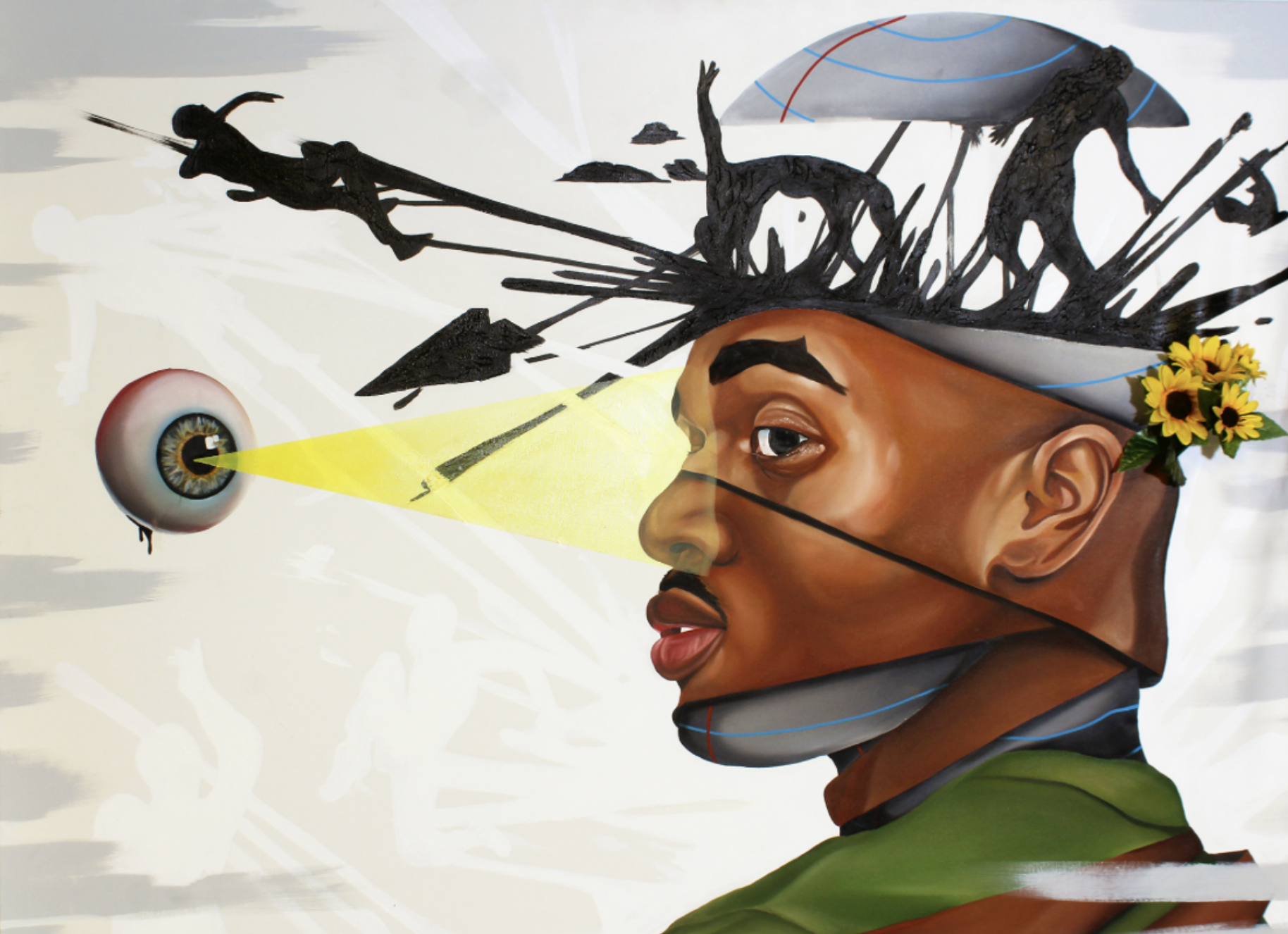
It Was All A Dream explores the rebirth of self and the continual cycle of shedding one identity in order to become another.
Two of the Paper People move through a surreal landscape shaped by rupture, emergence, and transformation. Their skin is made of notebook paper, marked by the familiar blue and red ruled lines that define the Paper People. One figure rises from a broken, shell-like form, while another appears partially submerged below, both caught in a space suspended between destruction and becoming.
This work is rooted in the idea that selfhood is never fixed. To grow, something in us must constantly die. Old versions of the self, old illusions, old attachments, old ways of seeing must be broken open so that something new can be born.
The piece draws on the story of Narcissus and the theme of metamorphosis. In that story, reflection becomes a site of transformation. Here, that transformation is not treated simply as vanity or self-obsession, but as a deeper confrontation with the self. To look at oneself fully is to risk being changed by what is seen.
The work continues the mythology of the Paper People: figures born from scrapped potential, existing between civilization and chaos. Their notebook-paper skin speaks directly to that origin. Like blank pages, they begin without a predetermined story. They transcend race, culture, emotion, and expectation. Though human in form, they are not bound by society’s definitions or stereotypes. They are undefined, unrestricted, and free to write their own destiny.
In It Was All A Dream, that destiny is shaped through rebirth. The broken shell suggests emergence, vulnerability, and the violence of becoming. The tangled yellow strands create tension between connection and entrapment, as though the figures are still tethered to the selves they are trying to outgrow. The enlarged human face in the foreground introduces another layer of reflection, asking whether the transformation is physical, psychological, spiritual, or all three at once.
The dream in the title becomes more than fantasy. It becomes the inner vision of who we might become after the old self has been undone.
This is a work about transformation through rupture. About identity as a cycle rather than a conclusion. About the difficult beauty of becoming someone new.
To be reborn, something old must be surrendered. To become, something former must end.
It Was All A Dream is an expressive contemporary artwork exploring rebirth, self-transformation, metamorphosis, reflection, identity, vulnerability, and the continual process of killing the old self to birth the new.
It Was All A Dream explores the rebirth of self and the continual cycle of shedding one identity in order to become another.
Two of the Paper People move through a surreal landscape shaped by rupture, emergence, and transformation. Their skin is made of notebook paper, marked by the familiar blue and red ruled lines that define the Paper People. One figure rises from a broken, shell-like form, while another appears partially submerged below, both caught in a space suspended between destruction and becoming.
This work is rooted in the idea that selfhood is never fixed. To grow, something in us must constantly die. Old versions of the self, old illusions, old attachments, old ways of seeing must be broken open so that something new can be born.
The piece draws on the story of Narcissus and the theme of metamorphosis. In that story, reflection becomes a site of transformation. Here, that transformation is not treated simply as vanity or self-obsession, but as a deeper confrontation with the self. To look at oneself fully is to risk being changed by what is seen.
The work continues the mythology of the Paper People: figures born from scrapped potential, existing between civilization and chaos. Their notebook-paper skin speaks directly to that origin. Like blank pages, they begin without a predetermined story. They transcend race, culture, emotion, and expectation. Though human in form, they are not bound by society’s definitions or stereotypes. They are undefined, unrestricted, and free to write their own destiny.
In It Was All A Dream, that destiny is shaped through rebirth. The broken shell suggests emergence, vulnerability, and the violence of becoming. The tangled yellow strands create tension between connection and entrapment, as though the figures are still tethered to the selves they are trying to outgrow. The enlarged human face in the foreground introduces another layer of reflection, asking whether the transformation is physical, psychological, spiritual, or all three at once.
The dream in the title becomes more than fantasy. It becomes the inner vision of who we might become after the old self has been undone.
This is a work about transformation through rupture. About identity as a cycle rather than a conclusion. About the difficult beauty of becoming someone new.
To be reborn, something old must be surrendered. To become, something former must end.
It Was All A Dream is an expressive contemporary artwork exploring rebirth, self-transformation, metamorphosis, reflection, identity, vulnerability, and the continual process of killing the old self to birth the new.